

 Português
  Español
  简体中文
简体中文 How to Avoid Scams and Fraud in International Trade
 25/11/2025
By Luana Oliveira
25/11/2025
By Luana Oliveira
 6 Minutes


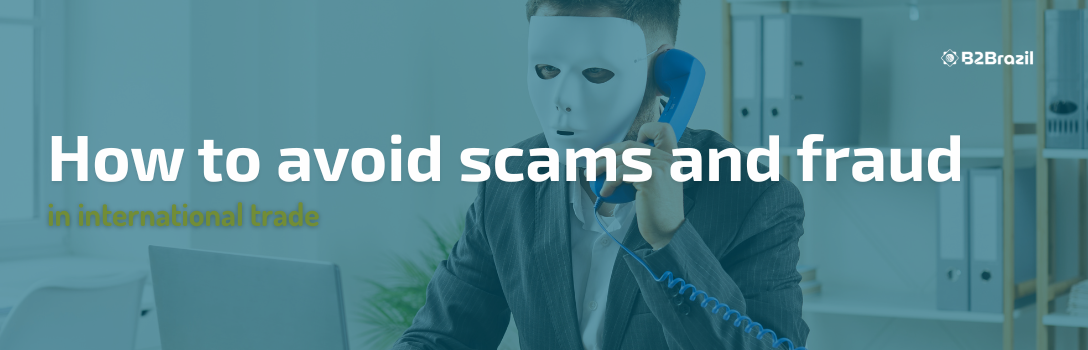
In a globalized world, where transactions occur digitally between parties, who often have never met in person, security in negotiations is essential. Negotiating safely requires an identity verification protocol, legal formalization of agreements, and the use of payment methods that protect capital against fraud and default.
If you are about to close a deal with a new partner on the other side of the world, exercise caution. Unfortunately, cybercriminals are becoming increasingly sophisticated, creating "shell companies" that look increasingly real. In this article, we will demystify security in foreign trade and tell you the essential tools to negotiate without fear.
The High Cost of "Cheap"
The classic scam in foreign trade almost always begins the same way: an irresistible offer. A premium quality product for a price far below the market average. The inexperienced negotiator, focused only on the theoretical profit margin, takes the bait.
The golden rule of safe negotiation is healthy skepticism. If a supplier in China, the USA, or Europe is offering something for 30% less than all competitors, raise a red flag. In global B2B, margins are tight, and prices are benchmarked by the commodities market and logistics costs. Miracles do not exist.
Therefore, negotiation starts with the question: "Why is this price possible?". If the answer is vague, back off.
The 5 Red Flags in a Negotiation
Before signing any Proforma or contract, you must act like a detective. Scammers usually leave subtle traces during negotiation. Watch out for these behavioral patterns:
- Psychological Pressure and Urgency: The supposed seller insists that the "special price" is only valid for today or that there is another buyer in line. Haste is the enemy of verification.
- Unprofessional Communication: Exclusive use of free emails (Gmail, Yahoo, Hotmail) instead of corporate domains.
- Refusal of Video Calls: In times of Zoom and Google Meet, a partner who refuses to show their face or give a virtual tour of the factory/office is hiding something.
- Sudden Bank Account Changes: The deal is closed, but at the time of payment, they ask to deposit into a personal account or in a different country than the company headquarters (the famous "tax haven"). This is an indication of fraud or money laundering.
- Inconsistent Documentation: The address on the Proforma Invoice is different from the address on the website, which is different from the legal registration.
The Importance of Verification
Verification of suppliers and buyers is the most important stage of negotiation.
- Seek Official Information: Try to find the company's registration with the chamber of commerce in the country of origin.
- Use Google Earth: Search the provided address. Is it a real factory or an empty lot? Is it a commercial building or a residence?
- Samples: Before negotiating a container, negotiate a sample. The sample shipping process already says a lot about the logistics and seriousness of the company. If they create a thousand difficulties to send a paid sample, imagine for shipping the final cargo.
But doing all this manually is exhausting and, sometimes, impossible without speaking the local language. That is why using specialized platforms is the smartest strategy.
The Role of B2Brazil in Your Security
By using our platform, you have access to companies that have undergone verification processes. The B2B Verified seal indicates that the company has had its legal existence and contact data checked by our team or international partners (such as Dun & Bradstreet).
Furthermore, we have an area entirely dedicated to educating you about risks. Mandatory Reading: Before starting your next negotiation, visit our Safe Business Practices page. There, we compile the most recent cases of attempted fraud and how to shield yourself from each of them.
Contractual and Financial Shielding
Let's say the company seems reputable. The negotiation continues in how you structure the agreement.
1. Contract and Incoterms: Never negotiate based solely on email exchanges. The document has no validity in international trade. Demand a detailed, signed, and stamped Proforma Invoice. Even better: have an International Purchase and Sale Contract. In it, clearly define the Incoterm.
- Security Tip: Avoid Incoterms that give total control of logistics to the other side if you do not have absolute confidence. Having control of the freight (e.g., negotiating FOB on import) allows you to choose a trusted freight forwarder to handle the merchandise.
2. The Payment Dilemma: The biggest financial risk is advance payment (T/T in Advance). If you pay 100% before shipment to a stranger, the risk is total.
- Safe Strategy: Try to negotiate 30% in advance and 70% against the copy of the shipping documents (BL). Thus, you only pay the rest when they prove the cargo has been dispatched.
- Maximum Security: For high values, use the Letter of Credit (L/C). The bank guarantees payment only if the documentary conditions are met. It is more bureaucratic, but eliminates the risk of default or non-delivery.
Post-Negotiation
The negotiation does not end at the signature. Maintain constant contact during production. Ask for photos of the production process, packaging, and container loading. Scammers hate clients who ask for real-time photos. If the seller starts making excuses not to send visual evidence ("broken camera", "factory security policy"), stop everything. It may be time to call a third-party pre-shipment inspection service to go there and check personally.
Frequently Asked Questions about Negotiation Security (FAQ)
How do I know if an international company is real?
The most effective way is to request the Business License and verify its validity with government bodies in the country of origin. Use platforms like B2Brazil that perform prior verification (B2B Verified) and look for verifiable commercial references.
What to do if I suspect a scam in foreign trade?
Immediately stop any payment. If a payment has already been made, contact your bank to attempt a recall of the international transfer. Save all conversations and documents and report the profile on the platform where contact was initiated.
What is the riskiest form of payment in importation?
100% advance payment via bank transfer (T/T) to an unknown account is the riskiest. If the merchandise is not sent, the chances of recovering the money are almost zero. Use Western Union or MoneyGram only for personal payments, never for B2B commercial transactions, as they are the preferred means of scammers.
Conclusion: Security is an Investment
Ultimately, learning how to negotiate in international trade safely is what guarantees the longevity of your company. A scam can break a business's cash flow, but secure processes build long-lasting companies.
Do not be afraid to be demanding. A serious supplier or buyer will respect your caution, as they also seek security. Distrust, verify, and formalize.
Are you ready to negotiate in an environment designed for the security of your business? Sign up for free on B2Brazil today and connect with verified companies around the world.