








 Português
  Español
  简体中文
简体中文 

 Unverified company


 Email
Email
 Facebook
 Whatsapp
 Twitter
 Linkedin
Description
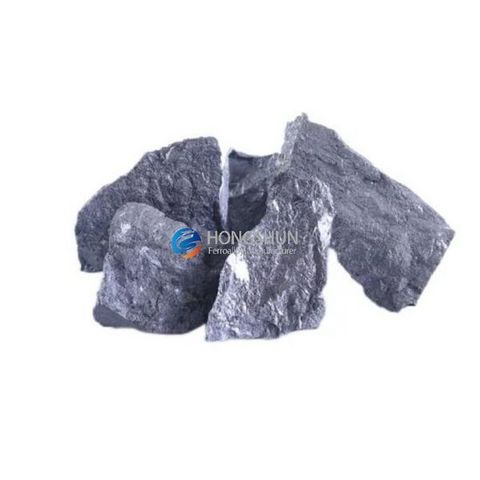
Calcium silicon (Calcium-Si alloy) is smelted from silicon dioxide, lime, and coke at 1500-1800°C in a strongly reducing atmosphere. As a ferroalloy product, it contains impurities such as iron, aluminum, carbon, sulfur, and phosphorus. It typically exists in bulk or powder form. Calcium-Si alloy powder can be further processed into calcium-Si cored wire. Calcium-Si alloy, a composite alloy composed of silicon, calcium, and iron, is an ideal composite deoxidizer and desulfurizer. It is widely used in the production of ordinary steel, low-carbon steel, stainless steel, and nickel- and titanium-based specialty alloys. It can also serve as a heating agent in converter steelmaking and, in the foundry industry, as a cast iron inoculant and ductile iron additive. Calcium-Si alloy not only has a strong deoxidizing capacity (deoxidation products easily float and discharge), but also significantly improves steel properties, enhancing plasticity, impact toughness, and fluidity. It is a key material in the production of high-quality steel, specialty steel, and specialty alloys. Silicon-calcium alloys are classified by calcium content into SiCa30-Ca1 (30% calcium, calcium + silicon ≥ 90%) and SiCa28-Ca2 (28% calcium, calcium + silicon ≥ 80%). By adding other elements, multi-element alloys such as silicon-calcium-aluminum, silicon-calcium-manganese, and silicon-calcium-iron can be created. High-calcium-silicon alloys (produced in electrode furnaces) can produce higher-specification products with stable quality and low impurities. Medium- and low-calcium-silicon alloys (produced in medium-frequency furnaces) primarily produce medium- and low-specification products, offering low production costs and flexible, controllable output. Advantages of silicon-calcium alloy products: Stable operation reaction, easy to use, uniform chemical composition, excellent performance and low impurity content, complete specifications and models to meet the diverse needs of users. Application fields of silicon-calcium alloy: Iron and steel metallurgy: As an important alloy additive, it can enhance the toughness and strength of steel, improve heat treatment performance, and reduce sulfur content. Foundry industry: Used as a deoxidizer to reduce the oxide content of castings, or as a rare earth alloy additive to improve the mechanical properties and surface quality of castings. Metallurgical industry: Used as a desulfurizer in steel smelting, and can also be used as an alloy additive to improve the hardness, strength and wear resistance of alloys. Electronics industry: Semiconductor materials used in the manufacture of electronic components, integrated circuits and solar cells, their conductivity and stability are indispensable in the electronics field. Silicon-calcium alloy production process: Silicon-calcium alloy production is mainly divided into three stages: Ore beneficiation: Beneficiation and purification of raw materials such as silica and limestone Ore reduction: Decomposition of oxides in the ore into elemental silicon and calcium through high-temperature reduction reaction Alloy smelting: Silicon and calcium are melted into new alloy materials through calcination, roasting, smelting, refining and other processes.
- Ferrochrome
- ferrosilicon
- ferrosilicon magnesium
- calcium silicon barium
- ferrosilicon inoculant
- calcium silicon powder
- metallic silicon
- ferromanganese
- silicon manganese
Production Capacity:
Not informed
Delivery Timeframe:
Not informed
Incoterms:
Not informedPackaging Details:
Not informed
More about
Anyang Hongshun Industrial Co., Ltd.

200-500
Employees

10M - 50M
Sales volume (USD)

80%
% Export sales
Year
Established
Business type
- Industry / Manufacturer
Keywords
- Ferrochrome
- ferrosilicon
- ferrosilicon magnesium
- calcium silicon barium
- ferrosilicon inoculant
- calcium silicon powder
- metallic silicon
- ferromanganese
- silicon manganese Ver Mais
Contact and location
-
 shun ********
-
+86 1********
-
Anyang / - 选择 - | China
 shun ********
 +86 1********
 Anyang / - 选择 - | China


