








 Português
  Español
  简体中文
简体中文 

 Unverified company


 Email
Email
 Facebook
 Whatsapp
 Twitter
 Linkedin
Description
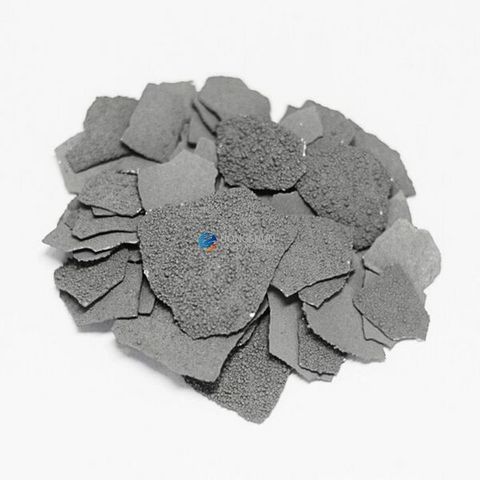
Electrolytic manganese flakes are pure manganese metal. Their primary component is manganese, with a manganese content of 99.7-99.9%. Impurities include carbon, phosphorus, sulfur, iron, silicon, and selenium. We offer electrolytic manganese flakes at competitive prices and can provide various sizes upon request. Electrolytic manganese flakes are a widely used alloy material. They are obtained by acid leaching manganese ore to obtain manganese salts, which are then electrolytically deposited in an electrolytic cell. They appear as ferrous, irregular flakes with high strength and brittleness, with one side shiny and the other rough, ranging in color from silvery white to tan. They can be processed into a silver-gray powder. They oxidize readily in air and dissolve in dilute acid, displacing hydrogen. Above room temperature, they react with water to release hydrogen. Electrolytic manganese flakes improve the heat resistance, wear resistance, and oxidation resistance of refractories and powder metallurgy. They serve as a base material for silicone molding polymers, and as an iron-based alloying additive in silicon steel alloys to improve the hardenability of steel. They are used in the production of high-temperature materials, enamels, ceramics, and ultra-pure silicon flakes. Hongshun, a professional ferroalloy manufacturer, boasts advanced production equipment and extensive experience to guarantee product quality and long-term supply. Our production lines strictly adhere to national quality standards, ensuring accurate product composition and reliable quality. We also provide technical consulting and after-sales service to answer any questions or concerns you may have during use. The applications of electrolytic manganese flakes are well-known. Manganese and manganese alloys are indispensable materials in the steel, aluminum alloy, magnetic materials, and chemical industries. What are the applications of electrolytic manganese flakes? Electrolytic manganese is extremely pure and serves to increase the hardness of alloy materials. Widely used in manganese-copper alloys, manganese-aluminum alloys, and 200 series stainless steel. In these alloys, manganese improves strength, toughness, wear resistance, and corrosion resistance. As mentioned earlier, manganese is an essential additive in the smelting industry. Electrolytic manganese, processed into powder, is the primary raw material for producing manganese oxide. Manganese oxide is widely used as a raw magnetic material in the electronics industry. Electrolytic manganese metal is also required in the electronics, metallurgical, and aerospace industries. With the continuous advancement of science and technology and the continuous improvement of productivity, electrolytic manganese metal, due to its high purity and low impurity levels, has been successfully and widely used in steelmaking, nonferrous metallurgy, electronics, chemicals, environmental protection, food hygiene, welding rod manufacturing, and aerospace. There are two main methods for refining manganese metal in the production of electrolytic manganese flakes: thermal (pyrometallurgical) and electrolytic (wet) methods. The purity of manganese metal (metallic manganese) produced by the thermal method does not exceed 95-98%, while pure manganese metal produced by electrolysis (electrolytic manganese metal) can reach purities of 99.7% to 99.9% or higher. Electrolytic production has become the primary method of manganese metal production. The price of electrolytic manganese metal is primarily influenced by supply and demand, electricity, and raw materials. In China, manganese metal companies are primarily concentrated in southern China, which relies heavily on hydropower. During the rainy season (April to October), electricity supply is sufficient to meet production needs; however, during the dry season, power shortages affect manganese metal production. Globally, the annual production of specialty steel requires 700,000 to 800,000 tons of electrolytic manganese, while manganese-aluminum alloys require approximately 10,000 to 110,000 tons, and magnetic materials such as manganese oxide require approximately 50,000 to 60,000 tons. Global demand is approximately 450,000 to 500,000 tons, with domestic demand around 150,000 to 200,000 tons. Comparison between Electrolytic Manganese Flakes and Metallic Manganese Blocks: Electrolytic manganese flakes and metallic manganese blocks are two different manganese products with distinct uses and properties. First, let's understand the uses of electrolytic manganese flakes. Electrolytic manganese flakes are a manganese product produced through an electrolytic process, characterized by high purity and ultrafine particles. Due to their excellent physical and chemical properties, electrolytic manganese flakes are widely used in the steel, electronics, chemical, and other fields. In the steel industry, electrolytic manganese flakes, as an alloying additive, significantly improve the strength, hardness, ductility, and corrosion resistance of steel. In the electronics industry, electrolytic manganese flakes are used in the manufacture of electronic components such as batteries and capacitors. In the chemical industry, electrolytic manganese flakes are used to produce chemicals such as manganese dioxide and manganese hydroxide, which are widely used in batteries, ceramics, and coatings. In contrast, manganese metal ingots are a more traditional manganese product. They are produced from manganese ore through high-temperature smelting and refining processes. Due to their high density, hardness, wear resistance, and corrosion resistance, manganese metal ingots are widely used in the steel, non-ferrous metals, and aerospace industries. In the steel industry, manganese metal ingots, as alloying additives, can significantly improve the strength, hardness, toughness, and corrosion resistance of steel. In the non-ferrous metals industry, manganese metal ingots are used to produce various manganese alloys, such as manganese-aluminum and manganese-copper. In the aerospace industry, manganese metal ingots are used to manufacture high-performance materials such as high-temperature alloys and stainless steel. In addition to the aforementioned differences, electrolytic manganese flakes and manganese metal ingots also differ in appearance. Electrolytic manganese flakes are typically flakes with a thickness of 10-20 microns, while manganese metal ingots are in blocks or granules. Furthermore, the chemical composition of electrolytic manganese flakes and manganese metal ingots differs. Electrolytic manganese flakes are high-purity and low in impurities, while metallic manganese blocks may contain more impurities. In summary, while both electrolytic manganese flakes and metallic manganese blocks are manganese products, they differ in their uses, appearance, and chemical composition. Depending on the application and needs, you can choose the right manganese product to meet your production and daily needs. Hongshun offers a wide variety of manganese metal products, including metallic manganese (96-97% Mn), electrolytic manganese flakes, metallic manganese powder, and metallic manganese blocks. As a professional ferroalloy supplier, our annual production capacity reaches 18,000 tons. For inquiries or orders, please leave us a message.
- Ferrochrome
- ferrosilicon
- ferrosilicon magnesium
- calcium silicon barium
- ferrosilicon inoculant
- calcium silicon powder
- metallic silicon
- ferromanganese
- silicon manganese
Production Capacity:
Not informed
Delivery Timeframe:
Not informed
Incoterms:
Not informedPackaging Details:
Not informed
More about
Anyang Hongshun Industrial Co., Ltd.

200-500
Employees

10M - 50M
Sales volume (USD)

80%
% Export sales
Year
Established
Business type
- Industry / Manufacturer
Keywords
- Ferrochrome
- ferrosilicon
- ferrosilicon magnesium
- calcium silicon barium
- ferrosilicon inoculant
- calcium silicon powder
- metallic silicon
- ferromanganese
- silicon manganese Ver Mais
Contact and location
-
 shun ********
-
+86 1********
-
Anyang / - 选择 - | China
 shun ********
 +86 1********
 Anyang / - 选择 - | China


