








 Português
  Español
  简体中文
简体中文 

 Unverified company


 Email
Email
 Facebook
 Whatsapp
 Twitter
 Linkedin
Description
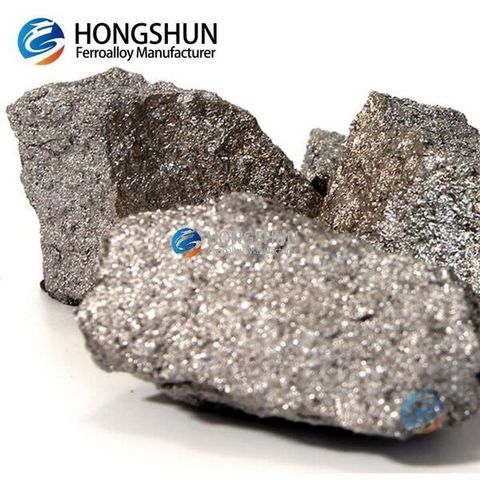
Silomanganese (also known as ferromanganese) is an alloy composed of manganese, silicon, iron, and a small amount of carbon. This widely used ferroalloy, with its blocky appearance and metallic luster, is a common composite deoxidizer in steelmaking and a thermal reducing agent in the production of low-carbon ferromanganese and metallic manganese. Silomanganese can be continuously smelted in electric furnaces of varying sizes. Manganese and silicon are the primary alloying elements in carbon steel. Manganese is a key deoxidizer in steelmaking, and is required for deoxidation in almost all steel grades. Adding silomanganese to the steelmaking process improves reduction efficiency and enhances the steel's toughness, hardness, strength, and elasticity. Silicon, as an effective graphitizing agent, converts carbon in cast iron into free graphite carbon. To meet the requirements of standard gray cast iron and ductile iron, a minimum of 4% silicon is required. Ferromanganese, silomanganese, and ferrosilicon are the primary forms of introducing manganese and silicon into molten steel. Silomanganese alloy chemical composition: Silomanganese alloy is primarily composed of silicon and manganese, and may contain other alloying elements such as iron and phosphorus. Its molecular formula is MnSi, with a manganese content typically ranging from 60% to 85% and a silicon content from 10% to 30%. It has a black appearance with a metallic luster and a density of approximately 7.2-7.4 g/cm³. Advantages of Silomanganese Alloy: Silomanganese alloy is composed of manganese, silicon, iron, and a small amount of carbon. It is a widely used ferroalloy. During the deoxidation process in steelmaking, the deoxidation products MnSiO3 and Mn2SiO4 produced by Silomanganese alloy have melting points of 1270°C and 1327°C, respectively. They feature low melting points, large particles, easy buoyancy, and excellent deoxidation effectiveness. When manganese or silicon are used alone for deoxidation, the burn-out rates are 46% and 37%, respectively. However, using Silomanganese alloy for deoxidation can reduce the burn-out rates to 29% for both. Silomanganese alloy is widely used in steelmaking, with its production growth rate exceeding the average for ferroalloys, making it an indispensable composite deoxidizer and alloying additive for the steel industry. Silomanganese alloy with a carbon content below 1.9% can also be used as an intermediate product in the silicothermic process for the production of low- and medium-carbon ferromanganese and metallic manganese. Silicon-manganese alloy classification and characteristics: Silicon-manganese steel can be classified into various grades (referred to in the industry as "grades") based on the content of the primary elements manganese (Mn) and silicon (Si). Common grades include: Silicon-manganese 6517 (Mn65Si17), Silicon-manganese 6818 (Mn68Si18), Silicon-manganese 6014 (Mn60Si14), and Silicon-manganese spheres (Mn55Si15). The number following the element symbol indicates the percentage of that element in the alloy. Silicon-manganese 6517 is a widely used silicon-manganese alloy in the steel industry. Its manganese content is ≥65% and its silicon content is ≥17%. The combined content of these two elements generally must exceed 83% to be considered high-quality Silicon-manganese 6517. Silicon-manganese 6517 alloy features high strength, corrosion resistance, oxidation resistance, and excellent processability. High strength: Mechanical strength significantly higher than pure iron and mild steel. Corrosion resistance: Resistant to corrosive media such as air, water, acids, and alkalis. Oxidation resistance: Silicon-manganese elements form a dense oxide film at high temperatures. Good processability: Easy to machine and form. 6517 silicon-manganese alloy effectively removes oxygen from steel, improving its purity and quality. Adding it to various steel grades improves its microstructure and wear resistance, making it an indispensable alloy material in the steel industry. Silicon-manganese balls 5515 are alloy balls primarily composed of silicon-manganese. They are commonly used in the steel industry as a composite deoxidizer and alloying additive. The production process involves heating and melting the silicon-manganese raw material, pouring it into a spherical mold, and then cooling it to form. A commonly used silicon-manganese ball is Mn55Si15 (5515 silicon-manganese ball). Silicon-manganese sphere production process: Ingredients: Silicon-manganese powder, carbon, sulfur, phosphorus, and other elements are blended according to chemical composition requirements; Ball forming: The mixture is pressed into spheres; Heat treatment: High-temperature treatment in an electric furnace promotes uniform distribution of alloying elements; Cooling: Prevents deformation and cracking; Surface treatment: Removes oxide scale and improves surface quality; Quality inspection: Tests chemical composition, physical properties, and surface quality; Packaging: Anti-oxidation packaging ensures safe storage and transportation. 5515 silicon-manganese spheres offer advantages: uniform particle size, reducing breakage and loss during smelting; fast melting speed and uniform distribution, reducing power consumption; excellent deoxidation performance, shortening deoxidation time; a wide range of applications, meeting the needs of various fields; and high cost-effectiveness, reducing user costs. Silicon-manganese 6818: 6818 silicon-manganese alloy is primarily composed of manganese (68%), silicon (18%), iron, and carbon, with small amounts of vanadium and titanium. This product can be used as a composite deoxidizer in steelmaking, effectively improving steel properties. It also serves as a reducing agent in the production of medium- and low-carbon ferromanganese and metallic manganese. 6818 Silicon Manganese Alloy Features: Deoxidation Efficiency: The high silicon-manganese content gives it a strong affinity for oxygen, resulting in large deoxidation product particles and a low melting point. Widely Used: Used for deoxidation and alloying in steelmaking, as well as producing other manganese-based products. Excellent Performance: High strength, corrosion resistance, and oxidation resistance make it suitable for manufacturing weather-resistant parts. Economical: Comparing its price to other alloys, it offers a competitive price. Easy to Machin: Excellent cutting, grinding, and welding properties. Silicon Manganese 6014: 6014 Silicon Manganese alloy contains 60% manganese and 14% silicon. It possesses excellent mechanical and physical properties and is widely used for deoxidation and alloying in steelmaking. Features: Strong deoxidation capacity, improving molten steel purity; Excellent mechanical properties, high strength, hardness, and toughness; Corrosion resistance, resistant to attack by acids, alkalis, and other media; Widely Applicable to a variety of steel products; Highly cost-effective and well-received in the market. In addition to being used as a deoxidizer and alloying additive in steelmaking, silicomanganese alloy is widely used in: Foundry: Improving cast iron properties, increasing strength, hardness, and wear resistance; Chemical Industry: Manufacturing redox catalysts and detergents; Power Industry: Used in electromagnetic materials such as transformer cores; Other Industries: Producing chemicals such as organic silicon and organic manganese. Silicon-manganese alloy production process: Silicon-manganese alloy is produced by reducing manganese oxide and silicon dioxide in manganese ore with coke in a carbon-heated furnace. The smelting process uses carbonaceous reducing agents, manganese ore, manganese-rich slag, sintered manganese ore, roasted manganese ore, and silica as raw materials, and lime, dolomite, fluorite, and other fluxes. Production is continuous in an electric furnace. Currently, mainstream silicomanganese production companies are moving toward larger, fully enclosed electric furnaces. To ensure product quality, the iron-to-manganese and manganese-to-phosphorus ratios in manganese ore must meet specific requirements. The higher the manganese content, the better the performance of these parameters. The silicon manganese production process mainly includes: Ore dressing: remove impurities after mining; Crushing: control the particle size through impact crusher; Hot blast furnace preheating: evaporate moisture and volatiles; Electric furnace smelting: chemical reaction of silicon manganese elements with electrodes; Casting: crushing and screening after cooling and solidification; Hongshun Silicon Manganese Alloy Hongshun Company is a silicon manganese alloy manufacturer located in the Taihang Mountains with rich mineral resources. It has the following advantages: Resource advantages: located in the alloy raw material production area with rich mineral resources. Quality assurance: equipped with advanced smelting and testing equipment, and passed ISO9001 certification Price advantage: factory direct supply, reducing intermediate links Specifications: natural blocks (20-150mm), processed blocks (10-100mm), powdered or customized; Packaging: ton bags or customized packaging; Application areas: steelmaking, casting, chemical industry, mining, etc.
- Ferrochrome
- ferrosilicon
- ferrosilicon magnesium
- calcium silicon barium
- ferrosilicon inoculant
- calcium silicon powder
- metallic silicon
- ferromanganese
- silicon manganese
Production Capacity:
Not informed
Delivery Timeframe:
Not informed
Incoterms:
Not informedPackaging Details:
Not informed
More about
Anyang Hongshun Industrial Co., Ltd.

200-500
Employees

10M - 50M
Sales volume (USD)

80%
% Export sales
Year
Established
Business type
- Industry / Manufacturer
Keywords
- Ferrochrome
- ferrosilicon
- ferrosilicon magnesium
- calcium silicon barium
- ferrosilicon inoculant
- calcium silicon powder
- metallic silicon
- ferromanganese
- silicon manganese Ver Mais
Contact and location
-
 shun ********
-
+86 1********
-
Anyang / - 选择 - | China
 shun ********
 +86 1********
 Anyang / - 选择 - | China


